In the last decade robotics has become a valuable tool to educators in developing cognitive and social skills for students of all ages. It has been used in the support of learning not only in science and technology but throughout all KLAs (Alimisis. 2013).
Constructivism and constructionism are the main teaching pedagogies behind educational robotics. Piaget argued that children construct their knowledge by manipulating artefacts (Alimisis. 2013). Educational robotics offers opportunities for students to engage in a hands on exploration, interact with their environment and work with real-world problems (Alimisis. 2013)
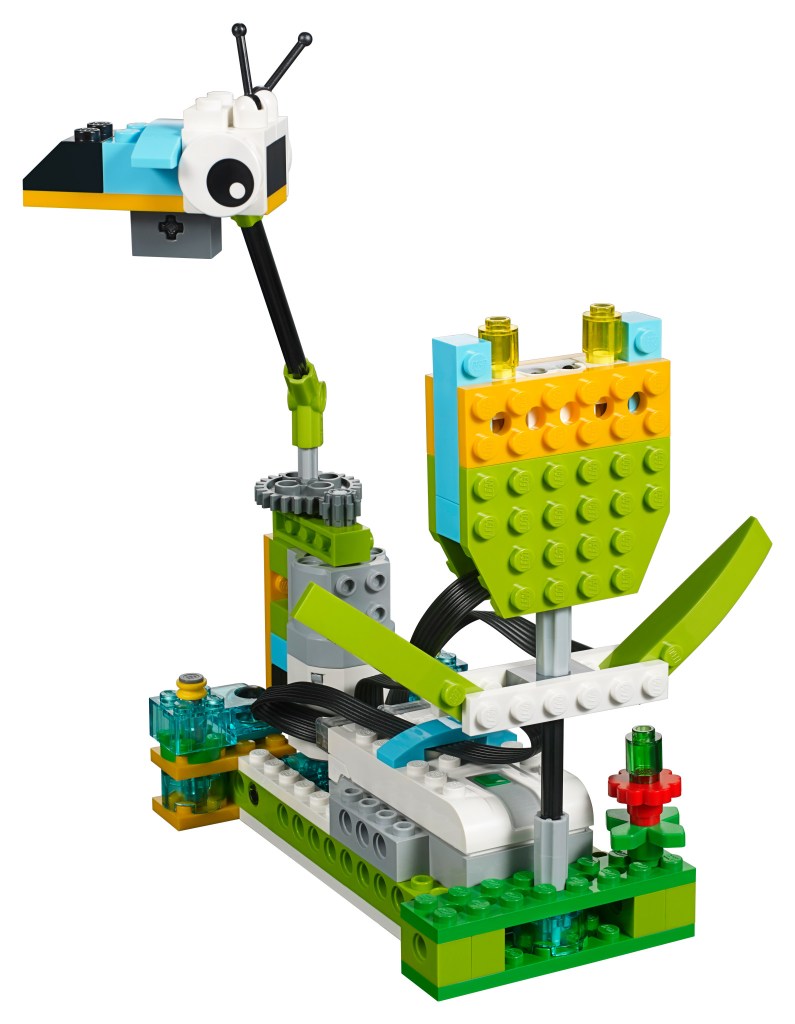
LEGO education introduced a upgraded STEM resource, WeDo 2.0 in 2016. It is a robotic system designed to serve as an intermediate step between the full featured robotics platform and regular LEGO. WeDo 2.0 is a easy to use kit that introduces students to robotics and teaches them to build LEGO models featuring motors and sensors. WeDo 2.0 uses lego bricks, a Bluetooth hub, and a drag and drop blocked-based software application which is compatible with most operating devices (Burfoot, Howe & Fennell, 2013).
Advantages

- Students working together sharing ideas, devices and robots promotes collaboration, within the classroom and encourages communication and problem solving skills (Jackson, 1968).
- LEGO WeDo 2.0 cover some typical mechanical structures, such as gears, bevel gears, rack, worm gears, pulley, belt drive, etc, which can be built step by step. Students are also able to make freestyle designs to create their own mechanical structures feeding students interest and curiosity (Eguchi. 2010).
Disadvantages
- The WeDo 2.0 set contains 280 LEGO pieces which are sorted on a tray within a large storage box, this may cause a disadvantage in some classrooms as large workplaces are required when using and a large area for storage is required.
- The colour of the LEGO pieces is dominated by greens, light blues and yellows with a small share of other colours. The limited colour palette may inhibit creativity.
How can WeDo 2.0 be used in Education
Students are able to program their models to explore a series of cross-curricular, theme-based activities while developing their skills in science, technology, engineering and mathematics as well as literacy.
Science – Year 3
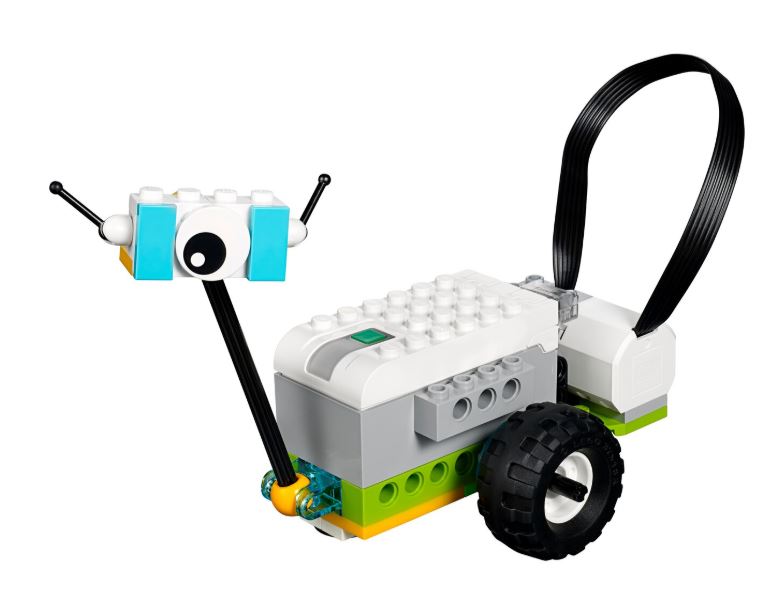
Discover ways that scientist can use rovers to explore places where humans can not go. Students can be creative by added sound, sensors etc to their rovers.
Mathematics – Year 7
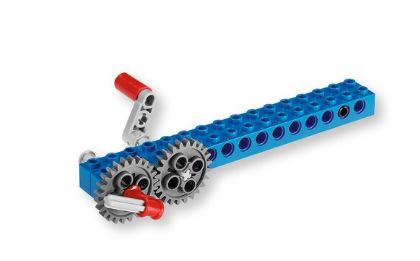
Students use a simple gear machine to measure the transfer of force and motion, adding different size and shaped gears.
References
Alimisis, D. (2013) Educational Robotics: Open Questions and New Challenges. Themes in Science and Technology Education, 6(1), 1-5
Burfoot, J., Howe, C. & Fennell, A. (2013). Robotics Education Learning Links: NSW Syllabuses for the Australian Curriculum Early stage 1-3. MacICT Macquarie ICT Innovations Centre
Jackson, P. W. (1968). Life in classrooms. New York: Holt, Rinehart and Winston.


Hi Christina!
This is an excellent review of robotics in eduction (specifically Lego WeDo). You’ve done an excellent job structuring this blog post; it’s very clear and easy to read as your ideas flow logically. By considering both advantages and disadvantages of using Lego WeDo to enhance learning, you’ve created a really comprehensive analysis. Furthermore, by including some lesson plans involving Lego WeDo, you’ve shown exactly how robotics have been utilised by teachers in the past (this is super helpful). You’ve also shown how Lego WeDo can enhance learning at both the primary and secondary level; this shows that robotics can be utilised for multiple educational purposes (and it also shows that you’ve done lots of really good research). The inclusion of two subject-based examples (maths and science) is a great addition because it proves that the possibilities of educational robots are extensive (if not endless).
Well done 🙂
LikeLike
Hey Christina, I really like the way your blog is laid out, especially with how you provided practical examples of how it can be implemented for science and maths. You provided an excellent overview of WeDo, its capabilities as well as its benefits, providing both the advantages and disadvantages of the technology. However, I also believe that the prices of the WeDo sets can be expensive, and most schools may not be able to properly implement this, with only a limited supply due to the cost of each WeDo set. Overall, a great blog!
LikeLike